
4 Days Marrakech Desert Tour Package: What's Included
A 4 days Marrakech desert tour package covers the full crossing from Marrakech to the Sahara at Merzouga and back, with two nights of lodging, most meals, a camel ride into the dunes, and a night at a desert camp. The four-day format gives you enough time to actually see Ait Benhaddou, the Atlas Mountains, and the Dades and Todra gorges instead of racing past them.
This guide walks through what you get day by day, where you sleep, and why the fourth day matters more than it looks on paper. Dunes Expedition runs this exact route, so the structure below reflects a real working itinerary rather than a generic sales sheet.
What a 4 days Marrakech desert tour package includes
At a baseline, the package covers round-trip transport from Marrakech, two nights of accommodation, breakfast and dinner each day, a guided camel trek into Erg Chebbi, and one night in a desert camp near Merzouga. A licensed driver-guide handles the route, and fuel, tolls, and pickup from your Marrakech accommodation are built in.
A few things usually sit outside the base price: lunches, drinks, entrance fees to some monuments, and tips. Many operators, including Dunes Expedition, offer a luxury camp upgrade, swapping the standard tent for a private suite with an ensuite bathroom, proper beds, and dinner served under the stars. Confirm which camp tier your quote reflects before you book, since the gap between a standard and a luxury camp is where most price differences come from.
The full 4-day itinerary from Marrakech to Merzouga
Day 1: Marrakech over the Atlas to the Dades Valley
The first day climbs out of Marrakech and over the High Atlas via the Tizi n'Tichka pass, which sits at 2,260 meters and ranks among the highest paved mountain passes in North Africa, according to Wikipedia. The views on the switchbacks are the reason you want a driver rather than the wheel.
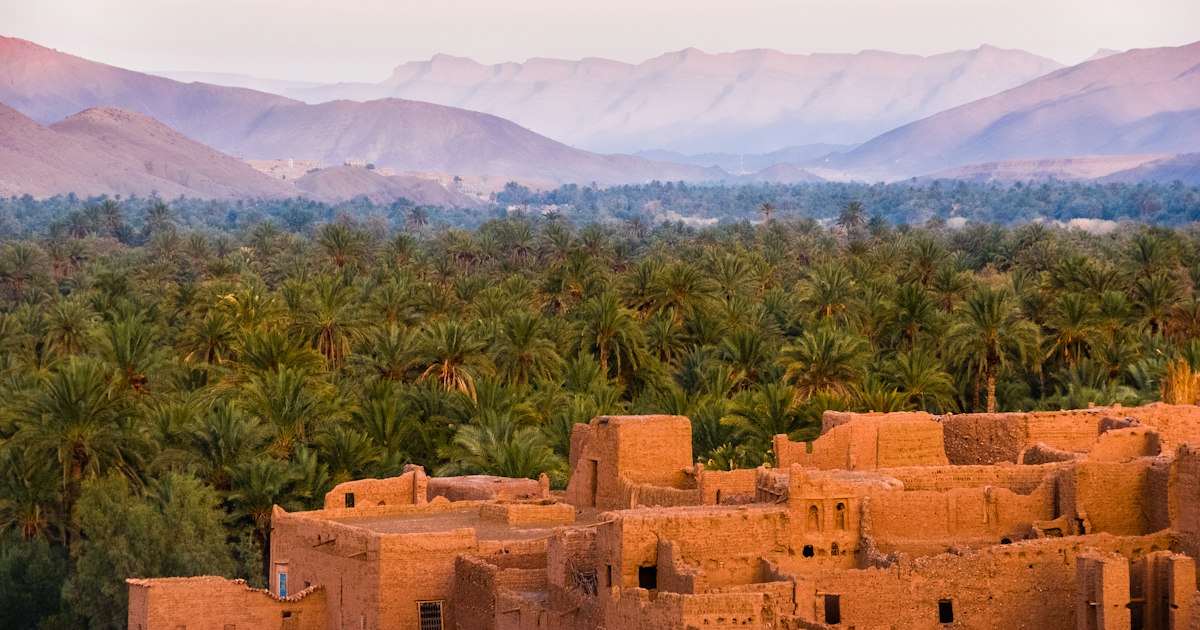
Mid-morning you reach Ait Benhaddou, the fortified earthen village that has stood on the old caravan road to the Sahara. It has been a UNESCO World Heritage Site since 1987, listed for its mud-brick ksar architecture, per the UNESCO World Heritage Centre. After a guided walk through the kasbah and a stop near Ouarzazate, Morocco's film-studio town, the day ends in the Dades Valley.
Day 2: Dades and Todra gorges to the dunes
Day two threads through the Dades Gorge, with its folded rock formations, then on to the Todra Gorge, where canyon walls rise several hundred meters on either side of a narrow river path. These are short walks rather than hard hikes, and they break up the drive.
By late afternoon the landscape flattens into pre-desert and the dunes of Erg Chebbi appear on the horizon near Merzouga. You trade the van for a camel and ride into the sand to reach the camp as the light drops. Erg Chebbi holds the tallest dunes in Morocco, and their sheer scale is why this stretch feels like the payoff for two days of driving.
Day 3: Sunrise, sandboarding, and the road back
You wake early for sunrise over the dunes, the quiet highlight most travelers remember longest. After breakfast at camp there is usually time for sandboarding down the slopes before the camels carry you back out. From Merzouga the route turns west again, retracing part of the Atlas crossing and overnighting in a town like Ouarzazate or Boumalne Dades.
Day 4: Return to Marrakech
The final day completes the loop back to Marrakech, with stops for photos and lunch along the way. You arrive by late afternoon or early evening, which leaves the fourth evening free rather than spending it in a van. Having this day in the plan is what keeps days one through three from feeling like a forced march.
The highlights worth slowing down for
Ait Benhaddou and Ouarzazate
Ait Benhaddou is the single most photographed stop on the route, and the four-day pace lets you climb to the top of the ksar instead of snapping a photo from the roadside. Nearby Ouarzazate gives context: this is where the region's film industry built studios that stand in for ancient cities on screen.
Dades and Todra gorges
The two gorges offer the biggest scenery contrast of the trip. The Dades is known for its serpentine road and rock shapes, while the Todra is a sheer, cool canyon that draws rock climbers. Spacing them across day two keeps either one from being a drive-by.
The desert camp and Erg Chebbi
The camp night is the centerpiece. A standard camp gives you a shared-style Berber tent and a communal dinner, while a luxury camp adds private facilities and more comfort. Either way, the draw is the same: a clear desert sky, a fire, and sunrise over the largest dunes in the country.
How the 4-day package compares to a rushed 3-day trip
A 3-day desert tour covers the same geography, but it does so by cutting the middle. The distance does not change, so the time has to come from somewhere, and it comes out of the stops. On a 3-day trip you typically reach the dunes on day two and start the long return on day three, which means the Dades and Todra gorges get shortened and the Sahara itself gets barely a full day.
The fourth day rebalances the schedule. Instead of two very long driving days bookending a brief desert stop, you get shorter daily legs, more time at Ait Benhaddou and the gorges, and an unhurried final return. For anyone treating this as the main event of a Morocco trip, a honeymoon, or a first visit, that extra margin is the difference between seeing the south and merely passing through it.
There is also a comfort argument. The roads through the Atlas and down to Merzouga are winding, and a 3-day plan asks you to spend long hours in the van on back-to-back days. Breaking the same distance into four days means fewer hours seated at a stretch, more stops to walk around, and a better chance of arriving at the dunes with energy left for the camel ride and the fire rather than collapsing into bed. If you are traveling with older parents, with children, or simply want the trip to feel like a holiday instead of an endurance test, the slower cadence is worth the extra night.
Morocco drew 17.4 million visitors in 2024, a 20 percent rise over 2023, according to figures from the Morocco Ministry of Tourism. With that many travelers moving through the same corridor, a well-paced four-day plan also helps you avoid the busiest moments at the headline stops.
Planning your trip
If this itinerary matches what you want from Morocco, the next step is to pin down two details before you book anything: your camp tier, standard or luxury, and your travel month, since desert nights swing from hot to cold across the year. Send those two preferences along with your group size when you request a quote from Dunes Expedition, and you will get an itinerary priced for your actual trip rather than a generic listing.
Frequently asked questions
What is included in a 4 days Marrakech desert tour package?
Most packages include round-trip transport from Marrakech, two nights of accommodation, breakfast and dinner, a guided camel ride into the dunes, and a night at a desert camp near Merzouga. Lunches and drinks are usually extra.
How long is the drive from Marrakech to Merzouga?
The full crossing takes most of two driving days, split by overnight stops, because the route climbs the Atlas Mountains over the Tizi n'Tichka pass at 2,260 meters and detours to Ait Benhaddou and the gorges.
Is a 4-day tour better than a 3-day desert tour?
A 4-day tour spreads the same distance across more stops, so you get real time at Ait Benhaddou, the Dades and Todra gorges, and the dunes. A 3-day version compresses it, meaning longer daily drives and rushed visits.
What should I pack for the desert camp night?
Bring layers for cold desert nights, a scarf for blowing sand, sunscreen, a flashlight, and a small daypack. Closed shoes help on the camel ride, and a power bank is useful since camp electricity can be limited.